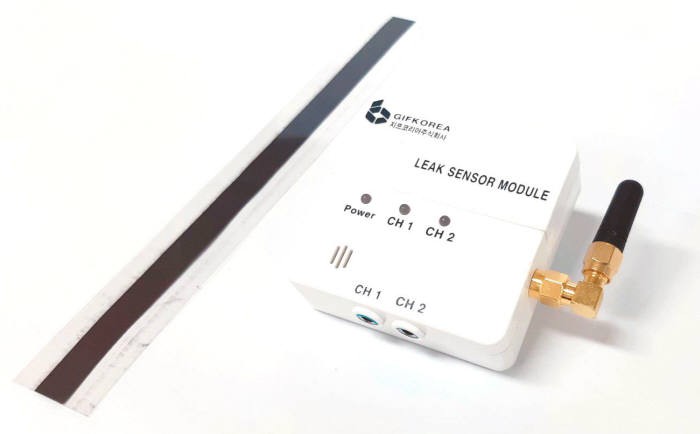
<Graphene polymer composite developed by Jeep Korea and a sensor for detecting harmful chemicals using it.>
A sensor that can quickly and accurately detect the leakage of harmful chemicals is coming out.
Jeep Korea, a specialized startup in chemical detection sensors (CEO Ahn Hyun-soo), recently announced that it successfully raised 1.8 billion won in a Series A investment round and will establish a production line for the 'graphene polymer composite sensor' by the end of the year.
The Ulsan Youth Startup Support Fund, which is focused on the potential for commercialization of composite sensor technology, invested 800 million won, along with 1 billion won from the Korea Credit Guarantee Fund. With this investment, Jeep Korea plans to produce a prototype of the graphene polymer composite sensor and build a production line by the end of the year.
The graphene polymer composite sensor developed by Jeep Korea is a material-reactive sensor. It has developed a polymer material that only reacts to harmful chemicals and synthesized graphene to enhance detection speed and accuracy.
Unlike existing film-type and optical sensors installed on the floor, it is used by being attached to flange and pipe connection areas. This makes it free from the malfunction problems caused by water or humidity on the floor, which are major flaws of existing sensors.
When harmful gases or liquids leak, it immediately alerts or sends a wireless signal regarding the leak status.
Another advantage is that it can accurately identify the leak point through the pipe flange attachment method.

<Jeep Korea CEO Ahn Hyun-soo (first from the left) and the research team.>
Jeep Korea plans to supply primarily to the southeastern industrial complexes, including Ulsan, where there are many chemical, gas, and steel companies, as a replacement for existing foreign and outdated sensors. Next year, it will also target overseas markets.
CEO Ahn Hyun-soo stated, “We can avoid production disruptions that may occur due to malfunctions, and with faster responses, we can minimize accident-related damage,” and added, “We plan to develop and showcase a sensor-based hazardous material detection monitoring system along with product mass production.”
Meanwhile, the demand for chemical leak detection sensors has steadily increased since the amendment of the Chemical Substance Control Act (Chemical Act) in 2015, mainly within the chemical industry. With the grace period for the revised Chemical Act ending this year, the market is expected to expand from mainly large corporations to small and medium-sized enterprises.
Ulsan=Lim Dong-sik reporter dslim@etnews.com